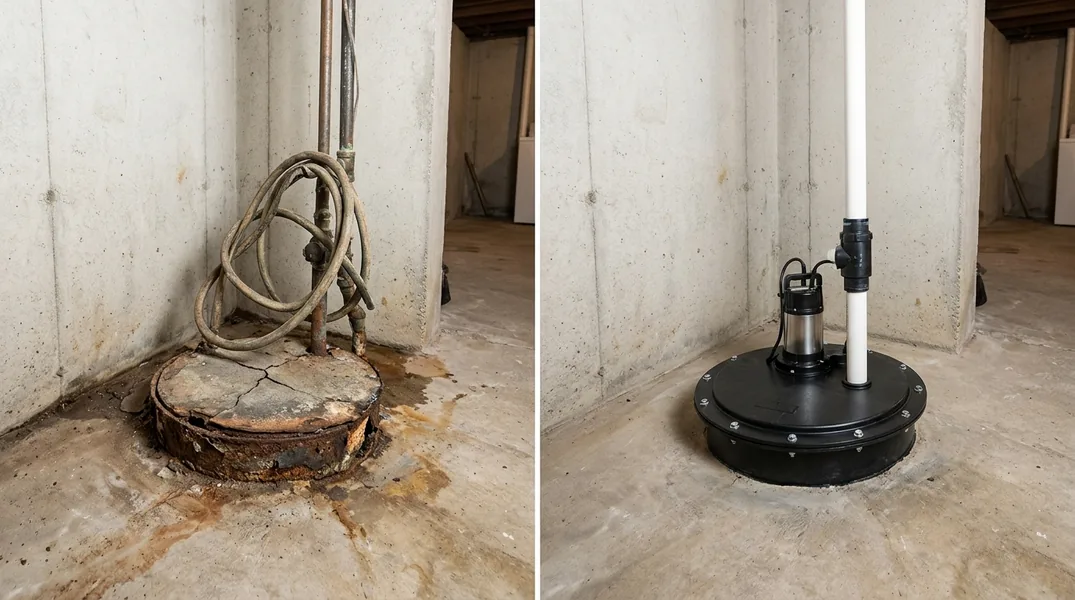
Why Spring Thaw Is the Riskiest Season for Danbury Basements
Spring in western Connecticut brings a welcome break from winter, but it also brings a serious threat to your basement. As temperatures climb, the snow that has piled up around your foundation melts quickly, and the ground is often still frozen a few inches down. That means meltwater cannot soak into the soil the way it normally would. Instead, it runs along the surface, pools against your foundation, and finds every crack and gap it can. Add a few heavy spring rainstorms to the mix, and you have the perfect recipe for storm basement flooding.
For homeowners in Danbury and the surrounding towns, this is not a theoretical concern. The hilly terrain and older housing stock in the area mean that water often drains toward basements rather than away from them. Your sump pump is the first line of defense, but only if it is ready to work when the water arrives. A pump that sat idle all winter can fail at the worst possible moment, which is why a little maintenance now saves a lot of heartache later.
Sump Pump Maintenance Checklist for Western Connecticut Homeowners
Start by testing your pump the simple way: pour a bucket of water into the sump pit and watch what happens. The float should rise, the pump should kick on, and the water should drain out quickly. If the pump runs but the water level does not drop, or if it makes grinding or rattling noises, you have a problem that needs attention before the thaw. While you are down there, clean out any debris in the pit and make sure the discharge pipe outside is clear of ice, leaves, and snow. A blocked discharge line is one of the most common reasons pumps fail during spring storms.
Next, check the Basement Waterproofing system as a whole. If you have an Interior Drain Tile System, make sure the channels are free of silt and that the pit is not clogged. Homeowners with Exterior Basement Waterproofing should inspect the exterior drainage and grading, since winter frost heave can shift soil and create low spots where water collects. A quick walk around the foundation after the ground thaws will tell you a lot. If you are not sure what to look for, a professional inspection can catch small issues before they become expensive ones.
The Sump Pump Check Valve: A Small Part That Prevents Big Problems
The sump pump check valve is one of those components that homeowners rarely think about until it fails. This one-way valve sits on the discharge pipe and prevents water from flowing back into the pit after the pump shuts off. Without a working check valve, every cycle sends water back down the pipe, forcing the pump to run again and again. That short cycling wears out the motor fast and can leave you with a burned-out pump right when you need it most. A failed valve can also let water drain back into the basement, defeating the entire purpose of the system.
Testing the check valve is straightforward. After the pump runs, listen for a thud or click as the valve closes, and watch the water level in the pit. If the water level rises again immediately after the pump stops, the valve is likely stuck open or clogged with debris. Replacing a check valve is inexpensive and takes only a few minutes, but it is easy to install incorrectly. If you are unsure, have a technician look at it during your spring tune-up. It is a small investment that protects the whole system.
Battery Backup Sump Pump: Your Safety Net During Spring Storms
Spring storms in western Connecticut frequently knock out power, and a sump pump without electricity is useless. That is where a battery backup sump pump earns its keep. A backup system runs on a charged battery when the primary pump loses power or fails, giving you hours of protection during the worst weather. For anyone who has ever come home to a flooded basement after a storm, a backup pump is not a luxury; it is essential insurance. Modern backup systems also alert you when the battery is low or the pump has run, so you are not caught off guard.
Before spring arrives, test your backup pump by unplugging the primary unit and running water into the pit. The backup should activate automatically. Check the battery charge and terminals, and replace the battery every few years as recommended. If you do not have a backup yet, this is the time to add one. Combined with a properly maintained primary pump and a solid Foundation Waterproofing strategy, a battery backup gives you peace of mind when the next storm rolls through.
When to Call a Pro: Sump Pump Maintenance Near Me in Danbury
Some maintenance tasks are easy to handle yourself, but others are better left to a professional. If your pump is more than five to seven years old, if it runs constantly, or if you have noticed dampness or musty smells in the basement even after the pump runs, it is time for a professional inspection. A technician can check the pump's amp draw, test the float switch, inspect the check valve, and evaluate whether your current system is sized correctly for the water volume your property sees during spring thaw. In many cases, a minor adjustment or part replacement is all that is needed.
Danbury Waterproofing serves homeowners throughout the greater Danbury area, including Bethel, Brookfield, and Ridgefield. If you would like a professional opinion on your sump pump and drainage system before the thaw, call (475) 256-1959 or request a free estimate. We can also walk you through pricing for any recommended repairs or upgrades, so there are no surprises. A little preparation now can save you from a very wet and expensive spring.
Looking for a professional basement waterproofing contractor in Danbury? Danbury Waterproofing responds fast for all your basement waterproofing needs.
Get a Free QuoteOur services: Basement Waterproofing · Interior Drain Tile System · Exterior Basement Waterproofing