Why Older Homes in Danbury Are Prone to Foundation Problems
Homes built before the 1970s, which make up a large share of the housing stock in Danbury, were often constructed with materials and methods that simply were not designed to handle today's moisture loads. Many of these foundations are made of poured concrete, concrete block, or even stone masonry, and after decades of freeze-thaw cycles, soil movement, and hydrostatic pressure, small weaknesses can turn into serious structural issues. The region's clay-heavy soil and high water table make matters worse, because water tends to collect around the foundation rather than drain away quickly.
That is why homeowners in older properties should treat foundation problems signs as early warnings rather than cosmetic annoyances. A hairline crack today can widen into a pathway for water intrusion, and a slightly bowing basement wall can eventually compromise the entire structure. Understanding what to look for below grade is the first step toward protecting your investment and avoiding expensive emergency repairs. If you are unsure whether what you are seeing is normal settling or something more serious, a professional assessment is always worthwhile.
Basement Wall Cracks: What They Mean and When to Worry
Not all cracks are created equal. Vertical cracks in poured concrete walls are often caused by shrinkage as the concrete cured and may remain stable for years. However, horizontal cracks, stair-step cracks in block walls, and cracks that are wider than a quarter inch are red flags that warrant immediate attention. These patterns often indicate soil pressure pushing against the wall or settling that is uneven across the foundation. If you can see daylight through a crack or notice moisture seeping in after heavy rain, the issue has already progressed beyond a cosmetic concern.
In older homes, basement wall cracks are frequently accompanied by efflorescence, that white chalky residue that appears when water moves through concrete and leaves minerals behind. Efflorescence is a reliable indicator that moisture is actively migrating through the foundation. Left unaddressed, this cycle of wetting and drying weakens the concrete over time. A thorough evaluation can determine whether the cracks are structural or moisture-related, and the right repair strategy will depend on that diagnosis. Ignoring these signs usually leads to bigger problems, including mold growth and compromised indoor air quality.
Bowing Basement Walls and Other Structural Red Flags
A bowing basement wall is one of the most serious foundation problems signs a homeowner can encounter. When a wall bulges inward, it means the soil outside is exerting pressure that the wall was never designed to resist. This often happens in older homes where the original drainage systems have clogged or failed, allowing water-saturated soil to push against the foundation. You may notice the wall leaning away from the sill plate at the top, or you might see diagonal cracks at the corners where the wall meets adjacent walls. In severe cases, the floor above may feel uneven or doors may stick.
Other structural red flags include gaps between the foundation and the exterior walls, floors that slope noticeably, and windows or doors that no longer close properly. These symptoms often develop gradually, which is why annual inspections of your below-grade spaces are so important. If you live in Bethel or the surrounding communities and notice any of these issues, it is wise to schedule a professional evaluation before the problem worsens. Addressing a bowing wall early with proper Foundation Waterproofing and structural support can save you from a much larger repair bill down the road.
Historic Home Waterproofing: Special Considerations for Older Properties
Historic homes require a thoughtful approach to waterproofing that respects the original construction while improving performance. Many older foundations were built with stone or brick that relies on breathability to manage moisture. Applying modern sealants or rigid waterproof coatings to these surfaces can trap moisture inside the masonry and cause spalling or deterioration. Instead, the right strategy often involves improving drainage around the foundation, redirecting downspouts, and installing interior systems that manage water without sealing the walls from the inside out.
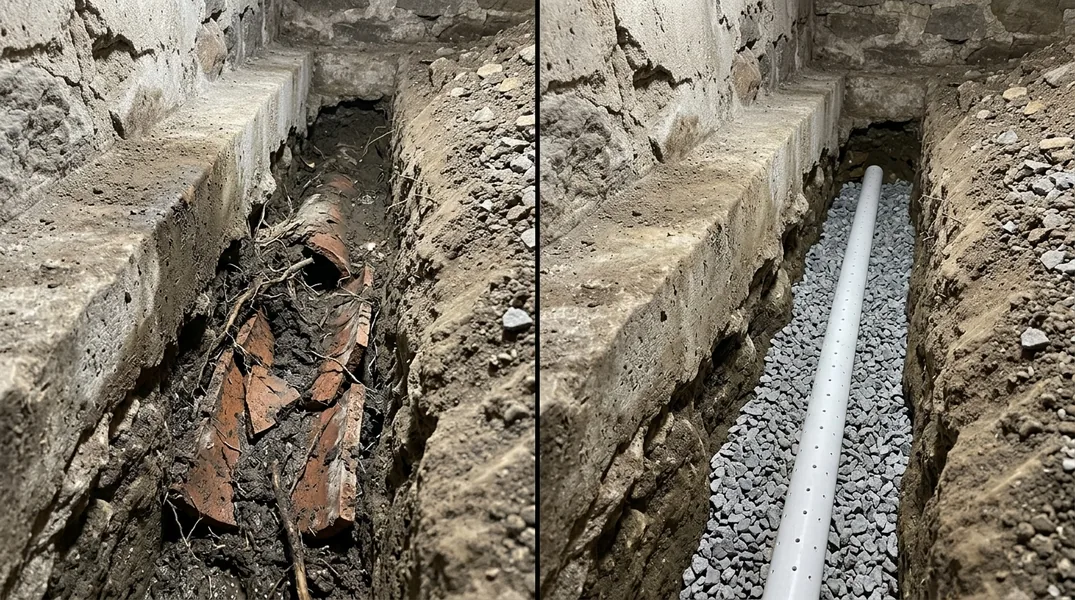
For homeowners dealing with Brookfield or Ridgefield properties of similar vintage, a site-specific assessment is essential. The goal is to address the source of the moisture rather than just the symptoms. This might mean installing an Interior Drain Tile System to capture water before it reaches the living space, or in some cases, Exterior Basement Waterproofing to relieve pressure on the walls from the outside. A comprehensive plan that combines these approaches with proper Basement Waterproofing will protect both the structure and its historic character.
When to Call a Professional for Basement Waterproofing Near Me
Many homeowners put off calling a professional because they are not sure whether the issue is serious enough. A good rule of thumb is to call if you notice any of the following: cracks that are widening, walls that are visibly bowing, water staining on the lower portions of walls, musty odors that do not go away, or floors that feel uneven. These are not problems that resolve on their own, and delaying a professional inspection often leads to more extensive and costly repairs. A qualified contractor can distinguish between normal settling and active structural movement.
If you are searching for basement waterproofing near me in the Danbury area, look for a company that specializes in older homes and understands local soil conditions. Danbury Waterproofing offers detailed assessments and can explain your options clearly, whether you need a simple crack repair or a full drainage solution. You can call (475) 256-1959 to discuss your concerns or request a free estimate. The sooner you address foundation problems signs, the more likely you are to preserve the value and safety of your home for years to come.
Basement Waterproofing Cost in Danbury: What to Budget
Homeowners often ask what basement waterproofing cost in Danbury looks like, and the honest answer is that it depends on the scope of the problem. A minor crack injection might be a few hundred dollars, while a full interior drainage system with a sump pump can run several thousand. Exterior waterproofing, which involves excavating around the foundation, is typically the most expensive option but may be necessary for severe cases. The key is to get a clear, written estimate that explains what is included and why each element is recommended.
It is also important to consider the long-term savings. Foundation repairs that are delayed often compound, turning a manageable waterproofing project into a major structural repair. When you request a pricing consultation, ask about warranties and maintenance plans. A reputable contractor will be transparent about costs and will not pressure you into unnecessary work. For homeowners in Danbury and nearby towns, investing in a proper waterproofing solution now is almost always cheaper than dealing with the aftermath of a flooded basement or a failing foundation later.
Looking for a professional basement waterproofing contractor in Danbury? Danbury Waterproofing responds fast for all your basement waterproofing needs.
Get a Free QuoteOur services: Basement Waterproofing · Interior Drain Tile System · Exterior Basement Waterproofing