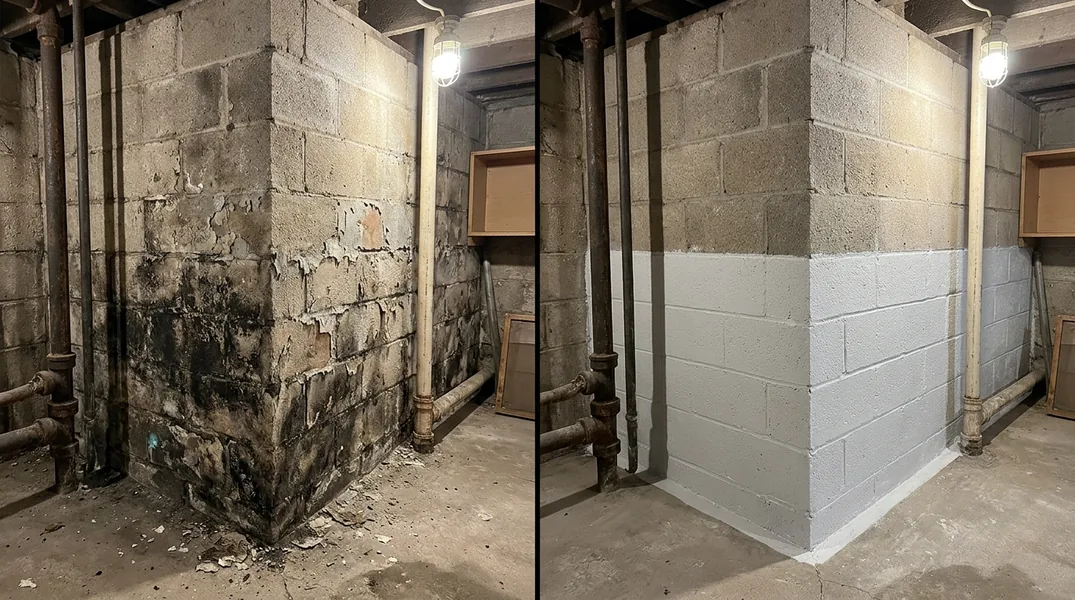
Why Danbury Homes Face Unique Waterproofing Challenges
If you live in Danbury, you already know that our corner of Connecticut is beautiful but demanding. The region's rocky, ledge-heavy soil and steep grades mean that water doesn't always drain away from foundations the way it does in flatter, sandier areas. Add in the freeze-thaw cycles of a New England winter and the heavy spring rains, and it's no surprise that many local basements struggle with dampness, seepage, and even standing water.
The term 'ledge water' gets thrown around a lot by contractors in this area, and for good reason. When groundwater hits an underground shelf of bedrock, it has nowhere to go but sideways, often straight toward your foundation. That's why a one-size-fits-all approach rarely works here. Choosing between interior vs exterior waterproofing isn't just a matter of preference; it depends on your home's construction, the source of the water, and how your lot is graded. At Danbury Waterproofing, we start every project by figuring out exactly where the water is coming from before recommending a solution.
Interior Waterproofing: Managing Water From the Inside
Interior waterproofing focuses on controlling water after it has entered the basement. The most common approach is an Interior Drain Tile System, which is installed along the perimeter of the basement floor. This system intercepts water that seeps through the cove joint (where the wall meets the floor) and channels it to a sump pump, which then discharges it safely away from the house. Because the work happens inside, there's no need to dig up your landscaping, driveway, or deck, which makes it a popular choice for finished basements or homes with limited exterior access.
Interior systems are also effective against ledge water and hydrostatic pressure that builds up under the slab. They're typically more affordable than exterior excavation and can usually be completed in a day or two. The trade-off is that interior waterproofing doesn't stop water from entering the foundation walls themselves, so it's often paired with crack injection or a vapor barrier to address humidity. For many Danbury homeowners dealing with wet floors or dampness after heavy rain, an interior drain tile system is the most practical and cost-effective first step.
Exterior Waterproofing: Stopping Water at the Source
Exterior Basement Waterproofing takes the opposite approach: it prevents water from ever reaching your foundation walls. This typically involves excavating around the perimeter of the home, applying a waterproof membrane or coating to the exterior of the foundation, and installing drain tile and gravel at the footing level to redirect groundwater away. In areas with high water tables or persistent ledge water, exterior systems can be the most reliable long-term fix because they address the problem at its origin.
The catch is that exterior work is more invasive and expensive. It requires digging down to the footings, which can mean removing decks, patios, and mature landscaping. It's also weather-dependent and takes longer to complete. However, for homes with block or stone foundations that are actively deteriorating, or for properties where water pours in through the walls rather than the floor, exterior waterproofing is often the only way to truly solve the problem. A proper Foundation Waterproofing plan may combine both interior and exterior elements depending on what we find during inspection.
Drain Tile vs Exterior Membrane: Understanding the Difference
Homeowners often hear 'drain tile' and 'exterior membrane' used interchangeably, but they serve different purposes. Drain tile is a system of perforated pipe (traditionally clay tile, now usually PVC) that collects water and carries it away from the foundation. It can be installed on the interior, along the footing, or both. An exterior membrane, on the other hand, is a sheet or spray-applied barrier that seals the foundation wall itself against moisture. Think of drain tile as the plumbing that moves water away, and the membrane as the raincoat that keeps the wall dry.
In a waterproofing comparison for a Danbury home, the right combination depends on your situation. If your basement floor gets wet but the walls stay dry, interior drain tile alone may do the job. If the walls are damp, weeping, or showing efflorescence, an exterior membrane paired with footing drain tile is usually the better answer. Many of the homes we service in Bethel and Brookfield sit on sloped lots where surface water is a major factor, and in those cases we may also recommend grading and downspout corrections alongside the waterproofing work.
Basement Waterproofing Cost in Danbury: What to Budget
Cost is usually the first question homeowners ask, and the honest answer is that it varies widely based on the method, the size of the basement, and the severity of the water problem. Interior drain tile systems are generally the more budget-friendly option, while exterior excavation and membrane installation cost significantly more because of the labor and restoration involved. A small crack injection or spot repair is far less expensive than a full perimeter system, so it pays to get a professional assessment before assuming you need the most extensive solution.
We believe in transparent pricing with no surprises. During your inspection, we'll explain what's causing the water, what each option involves, and what it will cost, so you can make an informed decision. Factors like accessibility, the presence of a finished basement, and whether a sump pump or battery backup is needed will all affect the final number. For a personalized quote, reach out for a free estimate or call Danbury Waterproofing at (475) 256-1959.
Basement Waterproofing Near Me: When to Call a Pro
Some homeowners in Ridgefield and the surrounding towns try to tackle dampness with a coat of paint or a dehumidifier, and while those can help with minor humidity, they don't address the underlying water intrusion. If you're seeing water on the floor after storms, white powdery stains on the walls, musty odors, or cracks that seem to widen over time, it's time to bring in a professional. Ledge water and hydrostatic pressure don't fix themselves, and delaying can lead to foundation damage that costs far more down the road.
A proper Basement Waterproofing assessment will identify the source of the water and recommend the right interior or exterior solution for your home. Whether you're in Danbury or a neighboring community, our team can walk you through the options and help you protect your biggest investment. Don't wait for the next heavy rain to find out you have a problem: call (475) 256-1959 today to schedule your inspection.
Looking for a professional basement waterproofing contractor in Danbury? Danbury Waterproofing responds fast for all your basement waterproofing needs.
Get a Free QuoteOur services: Basement Waterproofing · Interior Drain Tile System · Exterior Basement Waterproofing